Typically, I try to keep the tone of this blog light, as living in a foreign country has been difficult, and it's helpful to no one to dwell on the lows.
However, this past weekend we had the opportunity to visit two amazing places in Japan... but it's not exactly a happy story. I beg your indulgence for a few moments for a rather serious reflection on the weekend's events.
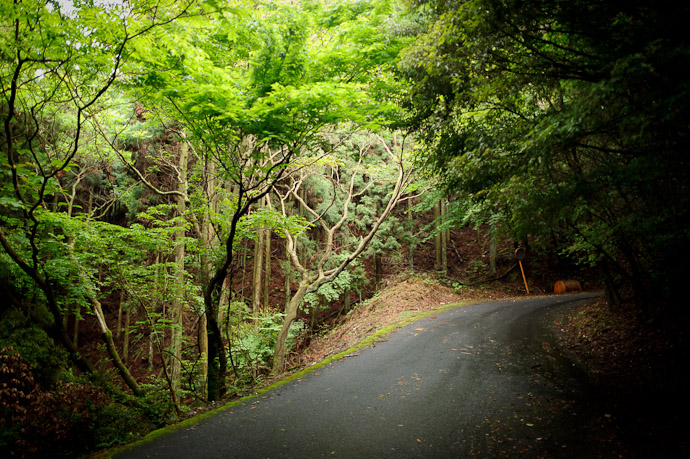
As foreigners, it is difficult for us to get a credit card. To use the expressways in Japan, you must pay... a lot. Unless you have a magic card called an ETC card. This card allows you cheaper fares, and half price on weekends. Since we have no magic, we drive on the crowded, long, winding, often crazily designed Japanese mountain roads.
 |
Japanese toll way
|
Our destination was the Japan Cat Network shelter in Inawashiro, Fukushima .
https://maps.google.com/maps?num=10&hl=en&q=ETC+card+Japan&ie=UTF-8 It is about an hour or so from the evacuated zone in Fukushima. It took us 8.5 hours to drive up one prefecture and across two. It did, however, give us beautiful views of the Japan Sea, and a place we would like to visit in the summer. (Joetsu, Niigata!)
The Japan Cat Network
http://japancatnet.com/ was founded by an American couple who came here to teach English about 20 years ago and were not able to leave. Their original shelter is in Hikone, Shiga, but they expanded to Inawashiro after the earthquake and tsunami of 2011. They have space in a restaurant and former pension house and can house approximately 40 cats and several dogs.
The woman who founded the shelters had to quit her position in order to keep the Inawashiro shelter running. They are desperately in need of live-in volunteers, as if there is no one to take care of the animals both in the shelter and the evacuated area, it is most likely the animals will not survive. She spends all of her time commuting between the Shiga and Inawashiro shelter and managing not only the practical aspects of the shelters, such as animal care and housekeeping, but also the managerial aspects like assessing foster and adoptive parents, marketing and administrative duties.
 |
| All work and no play saves a lot of animals in this case... |
At any rate, we arrived in Inawashiro tired and stressed from the long drive. We had opted to stay in the free loft area with the "sort of" socialized cats. The shelter also has a room for the less cat inclined you can rent for 2000Y.
We brought our sleeping bags, pillows and suitcase up to the loft, and released the cats. They were very excited to have people, even though some of them are still learning to be friendly. The shelter has a three step system for its cats. When they initially come in, they go into "quarantine" until they are vaccinated, spayed/neutered, etc. Then, they move into our room, where they become socialized with other cats. Lastly, they move into another room, where they become more socialized with people.
 |
| Our loft in Inawashiro |
Staying at the shelter is not a vacation. However, there are much worse ways to spend a weekend! After checking out the sleeping area, we jumped in and started cleaning. Volunteers are responsible for cleaning litter boxes, sweeping, general tidying and feeding/watering the cats. We did all of the above, then washed up for dinner at the tasty Hero's Cafe which served burgers, fries, and made a special vegetarian burger for us as well.
Our first night was full of cats thunking and running around. There are five cats that were brought in because the owner was evacuated and could not bring them into evacuated housing. She had already had to euthanize three of her cats! They were the most social, and when I woke up in the morning, I had five cats surrounding me on all sides.
We started our morning by cleaning and feeding cats in our room, and feeding the cats in quarantine. Then, we took the dogs for a walk through the beautiful mountains. Inawashiro is a resort town, that has been hit hard by the disaster as people fear radiation. The lake is gorgeous, there are numerous foreigner-friendly restaurants, and the atmosphere is calm and relaxed.
 |
| Lake Inawashiro |
After our walk, we fed and watered the dogs, then loaded our car up for the drive to Nihonmatsu. Currently, you cannot enter the restricted area without an evacuee. Only evacuees are allowed into the area, and have a pass specific to their vehicle. Nihonmatsu is the last town before mandatory evacuation. However, many people have voluntarily evacuated, and their elementary school is closed.
Here, we picked up the evacuee who started a small shelter of her own and is the lifeline to getting JCN into the evacuated area. Animal welfare groups had their passes revoked after one year, and are technically not allowed into the area. This evacuee knows that, and willingly goes against the rules to take people into the area at great risk to herself.
The evacuated area is eerie. It's basically the largest ghost town you will ever see. Weeds and other foliage have grown over roads, and cars are abandoned wherever they were last parked. Alan took a great picture of a K-truck that had been completely over grown with vines after being parked in the middle of the road.
 |
| Ghost town |
Radiation is a difficult disaster, because you can't see it. Everything looks and seems perfectly fine. It seems unreal and silly. Then, driving away from the 25 K mark, we saw our first radiation marker.
This is the level of radiation in the air only. The level in the ground is often as high as 50... which is an x-ray. The recommended daily maximum exposure of radiation is 0.10. After I saw this marker, I tightened my mask and realized that radiation is very real... and people in this area will never be able to return anytime in the foreseeable future. What must it be like to have everything you own just sitting there, contaminated, but outwardly looking perfectly fine? People keep coming back, harvesting their rice fields they cannot sell, cutting their grass, feeding animals. How strange to try to move on, when you have to keep coming back.
 |
| Protective gear and one of the feeding bins with a small hole so only cats can get in. |
People's homes are pristine, and left exactly as they were. Some even had laundry hanging. Damage from the earthquake has not been repaired, and all homes have signs on them from the police. Some homes have hand written signs as well, but I did not know what they said. Some people left signs for the JCN, asking them to find their cats, or leaving food near feeding stations. In true Japanese fashion, no detail was left behind. Vending machines were even emptied and the coin slots taped over. I have to wonder if people cleaned out their refrigerators...
As we drove through the area, cats would hear the car and come running down the road. There are so many animals still left in the area, and many are adults that have been living in the wild since the disaster. Wild animals are beginning to take over the area. We saw two huge foxes, one with a terrible case of mange. We saw several large boar, and an entire litter of baby boar. We saw too many tanuki to count. That's why we were happy to take home these adorable kittens, as the area was literally swarming with fearless tanuki just waiting for a kitten snack.
 |
| Two of the three kittens we picked up. |
Tanuki get into the feeding bins, and boar just charge them and tear them to pieces. These animals are not afraid of humans, and I was worried I would have to pit our rental car against the boar, as they showed no inclination to move while driving right at them.
The shelter tries to rescue all the animals they can, but there is never enough space, and more animals show up as time goes on. Some are migrants from other areas, some were never caught to be spayed or neutered, and so keep multiplying. The risks are getting higher and higher as well, as animal welfare groups are not liked, and not technically allowed.
We were stopped by the police, and I have no idea how they let us go. I suspect they were secretly sympathetic to our cause, as they said multiple times animal welfare groups were not welcome, even though we never claimed to be such. It was three foreigners and one Japanese evacuee in a giant van with four cats in the back. We couldn't have looked more suspicious. Our evacuee talked her way out of it, and we were allowed to continue on our way, by the grace of whatever power that be looks after such issues. It was a little jarring, especially to realize how precarious this work is, and how easily it can be destroyed.
Please consider supporting the Japan Cat Network at their website, http://japancatnet.com You can support the organization through a monthly donation of only $5 a month. Yes, I know I sound like a late night infomercial, but it truly is an inspiring organization working against amazing odds. I had no idea what we were getting ourselves into, and I am so thankful to have had my perspective challenged so greatly. Thanks for your patience.:)
 Seems like every year at the end of year you are either one of two things... too worn out from the craziness of the holiday season to even think about the fact a new year has begun, or horribly depressed and stressed about the passage of time and end up turning your life into a reenactment of A Christmas Carol without the happy ending.


.jpg)


 After a series of Japanese road trips almost every weekend since we've arrived in Japan, I have to announce I am hanging up my long-distance road trip shoes. After all, there's a reason why this country is criss-crossed with railway lines... the highways are emotionally exhausting and difficult to navigate.